Looking for some fresh air
 Air sacs are beginning to form in your baby's lungs. The lungs produce a substance called surfactant to allow breathing after birth. This substance prevents the walls of the tiny air sacs from sticking together, allowing them to fill with air with each breath. This week the lungs have started producing surfactant, but the amount is not yet sufficient. Some injections given to women at risk of premature delivery aim to speed up its production, in an attempt to prevent breathing problems if the baby is born early.
Studies of brain waves in babies at 26 weeks have shown a response to touch. Another interesting finding is that, when a bright light is held against the mother's abdomen, the baby turns its head towards the light.

You may suddenly feel your abdomen tighten for no apparent reason. Do not be alarmed: these are the contractions normally seen in pregnancy, called Braxton Hicks contractions. In threatened preterm labour, contractions recur at regular intervals. Your partner can help you identify regular contractions by placing a palm over the top of your uterus and waiting. At this stage, the top of the uterus is about 5 centimetres above your navel. Observing for about 20 minutes can help identify their presence and frequency. You can also do this yourself, but your partner may be more objective. You may not feel pain, or may notice only mild period-like cramps. If you are concerned about how often these occur, contact your doctor immediately.
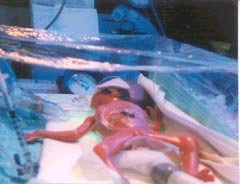
A baby born at 26 weeks
|
| Quiz | |