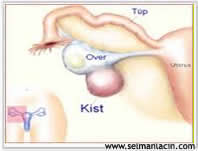
 ovaries organs located in the lower abdominal cavity, on the sides of the uterus. Eggs, the cells that enable women to become mothers, are stored in these organs.
. In addition, hormones secreted from the ovaries ensure menstrual regularity. In fact, it is a common problemovarian cystsThey are generally liquid-filled structures. Almost every woman has problems with her ovaries at some point in her life. cyst detectable. These cysts usually do not cause symptoms and do not even require treatment. However, sometimes cysts may develop depending on the type of cells they contain. hormone or similar substances and cause some complaints and symptoms. Very rare ovarian cysts bad good-natured It may also contain cells. In short, you should not just call it a cyst and ignore it.
The most common complaints in cysts groin pain, pain during sexual intercourse, feeling of fullness and pressure in the abdomen and menstrual irregularities. If the cyst rotates around its stem (torsion) or bursts, severe abdominal and groin pain may occur. The most common cause of simple cysts are hormonal irregularities. Normally, during each menstrual period, a simple cyst called a follicle, whose size can reach up to 2-2.5 cm, is formed in the ovaries. Then, when it cracks, ovulation occurs. However, in cases of hormonal irregularities, this fluid-filled sac that carries the egg either does not crack and remains fixed, or continues to grow and develop.cyst turns into shape. These are usually unilateral and if they do not grow too large, they do not cause pain and often disappear on their own. Again, one of the most common causes of cysts is psychological, and excessive stress can cause hormonal imbalance and lead to cyst formation.
If the cysts exceed 5-6 cm, some risks have increased. In addition, as the diameter of the cysts increases and ultrasound and if they show some other features (such as cysts seen in both ovaries, thick walls, solid structures inside, irregular structures extending beyond the cyst, different compartments inside, fluid accumulation in the abdomen, etc.), these cysts are malignant Since the probability of their occurrence increases, the diagnosis needs to be clarified and it is beneficial to intervene. Your doctor will tell you about this possibility at the end of the examination. If intervention is required, the type of operation is usually laparoscopy It is done in the form of . In this way, since the abdominal folds are not cut, the person will be able to return to home and work in a short time and the post-operative complaints will be less. If the cyst is significantly more likely to be malignant, then the physician may also prefer open surgery.
Apart from simple cysts, there are also some special cysts. endometriosis developing in the course of the disease chocolate cysts and also a benign tumor dermoid cysts It is also one of the most common cysts. Another problem is that endometriosis, the underlying cause of chocolate cysts, can cause adhesions between the sexual organs and neighboring organs.dermoid cyst It is a cyst that is relatively difficult to remove, and in some cases, it may be difficult to find solid tissue as they spread to the entire ovarian tissue, and in rare cases, the ovarian tissue may need to be removed along with the cyst.
In the presence of a cyst or cysts that are smaller than 5-6 cm in diameter and do not have the features mentioned above, your doctor will usually birth control pill It will be followed by an ovarian suppressant treatment such as whether the cyst shrinks or not. If there is no shrinkage, the intervention decision is reconsidered. In addition to ultrasonography tumor markers called blood tests It can also provide information about the nature of the cyst. However, it should not be forgotten that these markers may increase not only in malignant diseases but also in many simple events. But especially if they are low, it will prompt the physician to think more positively.
It is best to leave all these details to your doctor and visit your doctor regularly to avoid more serious problems. Remember that even if you have no complaints, you should visit your gynecologist only once a year.
Best regards..
Assoc. Dr. Selman Lacin
Medicana International Istanbul Hospital
Head of In Vitro Fertilization Center