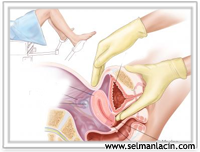
 vulvais the name given to the external sexual organs. Although it is slightly more common than vaginal cancer, it is still a very rare genital cancer. It constitutes only one percent of female reproductive organ cancers.
It is more common in two age groups: 40-50 years of age and 70 years of age. Those seen at a young age are associated with HPV (Human Papilloma Virus), similar to cervical cancer. Those seen at older ages are not linked to HPV. It is thought that environmental factors play a role in these cases.
One of the most important symptoms of vulvar cancer is persistent it is itchy. Skin changes such as hardening and blistering occur on the vulva skin compared to before, and most women can feel this difference.Itching that is resistant to treatment It is necessary even if there is no visible problem in these cases. Apart from this, color changes and various skin lesions such as redness, ulcers and masses may be observed in the vulva. Since the definitive diagnosis is made by biopsy, taking a biopsy is diagnostic in all suspicious cases seen in the vulva.
In order to facilitate the recognition of vulvar cancers, especially those at the initial stage, which are very difficult to observe visually when taking a biopsy, and to take a biopsy from the right place. colposcope You can also use a tool called . Colposcope provides a better examination by magnifying the vulva area 10-40 times. Most of the vulvar cancers are squamous cell cancer It is the same type of skin cancer called. In other words, they are cancers of the multilayered tissue that covers the skin. Apart from this, special types of cancer Paget's disease, basal cell cancer, and malignant melanoma It can also be seen in the vulva. In half of the cases, diagnosis can be made at an early stage. Treatment is primarily is surgery. Usually vulvectomy (removal of the vulva skin) is required. The surrounding tissue and lymph nodes are removed along with the tumor. ; The operator removes the tumor, surrounding skin, perhaps the lymph nodes in the groin, and the skin between the lymph nodes and the tumor. The type of cancer and the size of the tumor determine how much tissue needs to be removed. In advanced stages, radiotherapy may be applied in addition to surgery. When caught at an early stage, the chance of cure can reach 90%.
For the gynecological cancers home page, please Click here.