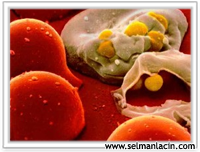
 HIV is a virus that disrupts the immune system in humans. This virus causes AIDS. Since HIV disrupts the body's immune system, it weakens the person against some infections (inflammations caused by microbes).
Having HIV virus in your body does not mean you have AIDS. It can take several years for the HIV virus to weaken the immune system enough to make the body sick. During this time, a person with HIV may not get sick and can live healthy for years without turning into AIDS.
AIDS, Acquired Immune Deficiency Syndrome (Abbreviation for Acquired Immune System Dysfunction Syndrome). AIDSIt is a combination of a number of rare infections and cancers that people with HIV can get. If a person with HIV contracts one of these certain diseases, then he or she has AIDS. Many of the organisms that cause this disease are very common and harmless to someone with a healthy immune system. However, they can cause very serious illness and death in someone whose immune system is badly damaged.
How can you get HIV?
HIV can be transmitted from one person to another four There are main roads, these are;
1. Having vaginal or anal sexual intercourse with someone with HIV without using a condom,
2. Using a drug syringe contaminated with infected blood,
3. HIV is transmitted from a pregnant woman to her child during birth or through breastfeeding,
4. By receiving the blood of an infected person through blood transfusion.
HIV is not transmitted through daily social interactions, for example; Courtesy kissing, touching, hugging, shaking hands swimming in the same swimming pool, using the same toilet, plate, fork or knife, or eating food prepared by someone with HIV. Cough, sneezing, tears, insect bites or animal bites.
Can it be cured by sexual intercourse?
If you have vaginal or anal sex with someone who has HIV without using a condom, you can contract HIV and another sexually transmitted disease. If you are going to have sexual intercourse, a condom creates an effective barrier against HIV. Condoms also protect against other sexual diseases and unwanted pregnancies.
What is HIV testing?
HIV is usually identified by a blood test, called an HIV antibody or HIV test. This test looks for the presence of HIV in the antibodies produced by the immune system.
It takes up to three months for the immune system to produce enough antibodies to identify HIV and for it to show up in the test. This time period window time or called serological conversion time.
If antibodies are found, the test result is considered positive. This means that person is HIV-positive. If no antibodies are found, the test result is considered negative. This means, as long as the test is done after the three-month window, that person is HIV-negative.
Can HIV be cured?
Anti-HIV therapy is a treatment with drugs that fight HIV. These drugs affect the proliferation of the virus in cells in the human body, but cannot completely destroy the virus. Anti-HIV drugs are often prescribed in a combination of three or more. This is called combination therapy or Highly Active Antiretroviral Therapy (HAART). Since its discovery in 1996, HAART has been very effective in controlling HIV and AIDS for many, but not all, people.
The treatment has helped many people, but it has side effects, which can sometimes be very serious. This can make treatment difficult and lead to complex treatment regimens that people must follow. These difficulties in taking medications mean that treatments are sometimes not successful. At the same time, the longer the treatment takes, the less likely it is to succeed. If HIV becomes resistant to the medications taken, treatments will fail. If a drug combination is not successful in treatment, another combination may be tried, however, the more treatments fail, the harder it is to find a combination that will be successful.
Is it transmitted through drug use?
If you use drugs and share your needle and/or syringe with others, you can contract both HIV and other blood-borne viruses, such as Hepatitis C. If you use drugs, use a different needle and syringe for each time you inject.
What if we want to have a baby?
If you are pregnant and have HIV, the risk of passing HIV to your baby can be reduced from 20 percent to 1 percent by providing necessary care before, during and after birth. To reduce the risk of transmitting HIV;
During your pregnancy, you can use anti-HIV medications. You can give birth by cesarean section. Since the risk of HIV passing through breast milk is about 10 percent, you can feed your baby with a bottle.
What happens when you donate blood?
Donating blood is not dangerous. All instruments are sterile and used only once. All blood-related products, organs and cells are tested for the HIV virus. Blood products are also heat treated to destroy HIV. As a result, the risk of contracting HIV through blood transfusion in the UK is negligible.
Are there medications that prevent HIV infections?
There is not yet a vaccine to prevent HIV infection or a cure for AIDS. Experiments with vaccines are being conducted, but there is no sign of an effective vaccine being available any time soon.
For the sexually transmitted diseases home page, please Click here.