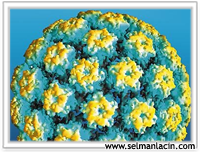
 Condyloma/conduloma or condyloma accumunata Warts in the genital area (just like warts on the hands) are unpleasant problems.
Condylomas are sexually transmitted and human papilloma virus They are skin infections caused by a virus called (HPV). And unfortunately they have a tendency to recur. HPV doesn't just cause warts in the genital area. There are more than 60 different subgroups of this virus. For example, type 1 is responsible for warts on the hands. The remarkable aspect of this issue is that some of these groupsto cervical cancer is knowing why it happens. Some types can cause anal cancer.
Of course, not every HPV infection causes condyloma or cancer. In fact, most infections are transmitted without symptoms. The person's immune system can cope with this virus and the disease is neutralized before symptoms appear. However, this success does not mean that HPV is harmless. HPV, which causes condyloma (wart) formation in the genital area, is a virus that has the ability to settle inside cells and affect the genetic structure of the cell. HPV has many subtypes. Some of these subtypes, with their effects on cells, cause the cells to turn into cells that can multiply rapidly and uncontrollably on their own. The ability of cells to multiply uncontrollably brings with it the risk of cancer formation in the tissue where the cells are located. It is thought that these oncogene (carcinogenic) subtypes of HPV play a very important role in the development of cervical, vaginal and vulva cancers. These effects are long-term effects and are initiated only by HPV subtypes with oncogenic effects.
contagion
It can be transmitted through any sexual intercourse with an individual carrying genital HPV disease. The virus is transmitted through skin-to-skin contact through microscopic tears and abrasions that occur on the skin during intercourse. The detection of the virus in male semen suggests that it can also be transmitted through contact with body fluids. Not everyone who comes into contact with the virus develops symptoms of infection, but individuals who develop condyloma 60-90% of It was determined that his partner also had the virus. Once the virus enters the body, it can remain silent for many years. It can be seen in anyone who is sexually active. It is most common in people between the ages of 15 and 30 who have had more than one partner or who have had sex with more than one person. It follows a rapid course during pregnancy. Rarely, it can also be passed from mother to her baby. Symptoms may appear months or years after contact with the virus.
In most patients, symptoms appear within 1-6 months. The symptom is usually in the external genital area. small warts emerges. These can be seen by the person or felt by hand. warts soft, pink-white, cauliflower-like are formations. They can be singly or in groups. From time to time, they are not puffed out but are found flat. Rarely, they can also be seen in the vagina, around the anus, and in the mouth and throat. There is no pain in condyloma, but occasional itching and burning may occur. Without treatment, warts can remain for a long time without any change, but this behavior is very rare. In general, they have a tendency to constantly grow and expand. This growth occurs faster if there is another vaginal infection along with the condyloma. It mostly spreads to moist and warm areas of the body. If abnormal color and shape changes and abnormal swellings are observed around the vagina and anus, if there is itching, burning and bleeding in the genital area, if the partner has or has had condyloma before, it is necessary to undergo a gynecological examination. Diagnosis is made by seeing lesions during examination. Sometimes, by applying some solutions, it can be determined whether there are warts or not by the color changes on the skin. In cases where there is no externally visible lesion, a magnifying glass-like view of the cervix is observed.colposcope Diagnosis can be made by examining it with a device called .
Vaginal smear test is also extremely important in the diagnosis and follow-up of condyloma. Because, as I mentioned before, the viruses known to cause cervical cancer are from the same family. People who have had condyloma at any time in their lives should have smears done once a year. Partners of people diagnosed with condyloma should also be examined and treated if necessary. Because an untreated partner can cause constant reinfection of the infection.
treatment
Condyloma is a disease that should not be neglected. It is not possible to destroy the virus in treatment. Treatment only eliminates warts. Since there is no treatment or vaccine for HPV infection yet (but I think studies abroad have been completed and are about to be launched in some countries), the most important factor in the treatment of this disease is knowing the disease. In many cases, one treatment is not sufficient and at least 2 sessions are required. Both medical and surgical approaches can be applied in treatment.
Some external medications can be used as medical treatment, but this is a long-term and laborious treatment. Most medications should be administered by the physician, not the patient, and should be applied directly to the lesion. The drug can cause damage when it comes into contact with normal tissue. Therefore, extremely careful application is required. Some medications are injected directly into the lesion by the physician. The most common method of surgical treatment is burning or freezing the problem. The aim here is to destroy the event. Liquid nitrogen or carbon dioxide is used in the freezing process (cryotherapy, cryotherapy). In the burning process, laser or electrocautery is applied. Some larger lesions may require surgical removal. For other surgical procedures except freezing, local or preferably general anesthesia is applied.
The most effective way to reduce the risk of genital warts is to not have multiple partners. But in practice condom use It is the most effective way of prevention. Condoms provide protection against many diseases, including sexually transmitted diseases, as well as warts. Since warts can be found outside the area covered by the condom, condoms may be ineffective at times.